When patients and families are trying to make sense of a new treatment option, questions tend to come quickly. For Danielle Lo, MSN, RN, helping them find answers has been a central part of her work since joining Penn Memory Center (PMC) as its Brain Health Navigator in June 2026.
Lo works with patients and caregivers who are considering anti-amyloid therapies, treatments designed to remove amyloid plaques from the brain and slow cognitive decline in people with early Alzheimer’s disease. Patients are referred to her by their PMC providers and, with their consent, receive support throughout the process, from understanding treatment options and scheduling appointments to addressing questions about side effects, insurance and cost.
For families facing complicated medical decisions, Lo offers a familiar point of contact they can turn to with questions and concerns. In some ways, the role feels familiar to her, too.
“As a daughter of immigrant parents, I think I’ve been playing a nurse navigator role before realizing there was a title for it,” she said.
Growing up, she saw how confusing health systems and medical information could feel for patients and families. Those experiences stayed with her and now shape the way she approaches her work at PMC.
Before joining the center, Lo worked in Penn Medicine’s neuroscience medical/surgical division, where she built her clinical skills while caring for patients in high-acuity situations. She also learned how important communication becomes when patients and families are taking in a lot of information at once. That lesson carries into her work today, where no two conversations look exactly the same.
“For some, they are ready to hear everything about the therapies,” she said. “On the other hand, some may express this is an overwhelming time, so my approach will be to listen.”
That flexibility also means revisiting information, finding different ways to explain medical details or giving families space to ask questions they did not think of during a clinic visit. She might spend one day helping someone schedule an appointment or discussing a test result. On another, she might have a longer conversation about treatment risks, infusion schedules or finances. The goal is to help patients and caregivers feel more prepared before they return for their next visit.
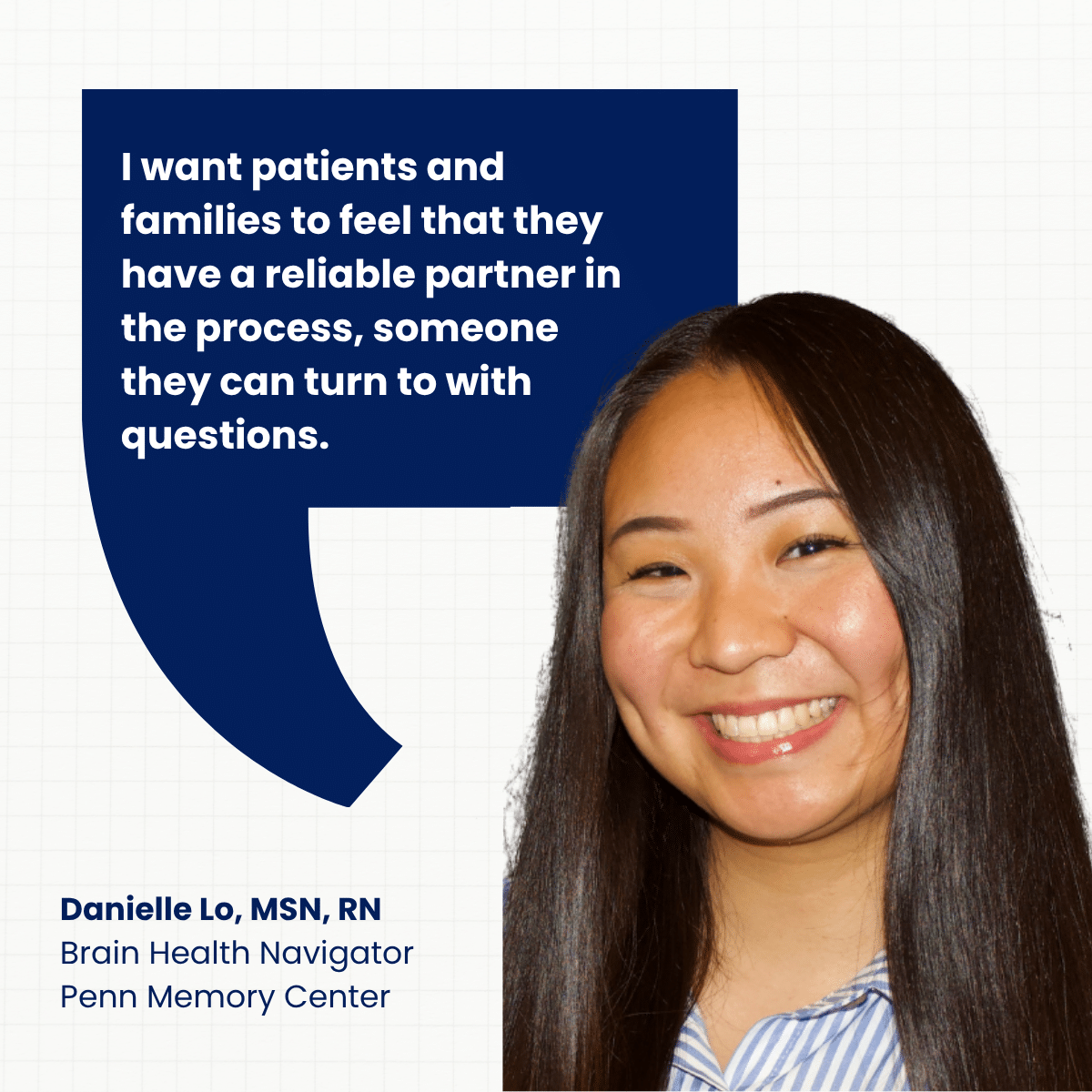
Her background as a preceptor and clinical instructor has shaped how she explains complicated medical information. When discussing anti-amyloid therapies, Lo starts by asking families what they already know about the treatments and builds on their understanding. Her goal is not to convince anyone to pursue treatment, but to help patients and caregivers feel informed and comfortable with their decisions.
“The most meaningful part of my role is when patients and their caregivers feel empowered to make an informed decision, regardless of whether they choose to pursue these treatments,” she said.
She is especially mindful of caregivers, who often carry their own worries while focusing on the person they care for.
“I appreciate when they are able to open up to me about their concerns because they may have had to be ‘strong’ for the patient,” Lo said. “My role is supporting both the patients and the caregivers.”
As Lo settles into PMC, she is also helping shape what the Brain Health Navigator role looks like at the center. The model is still relatively new in this area of care, and she is looking forward to finding ways to make the process easier for patients and families as the program grows.
Most of all, she wants people to know the navigator is there for them.
“I hope they understand that the Brain Health Navigator role exists specifically for them and feel comfortable reaching out,” she said.